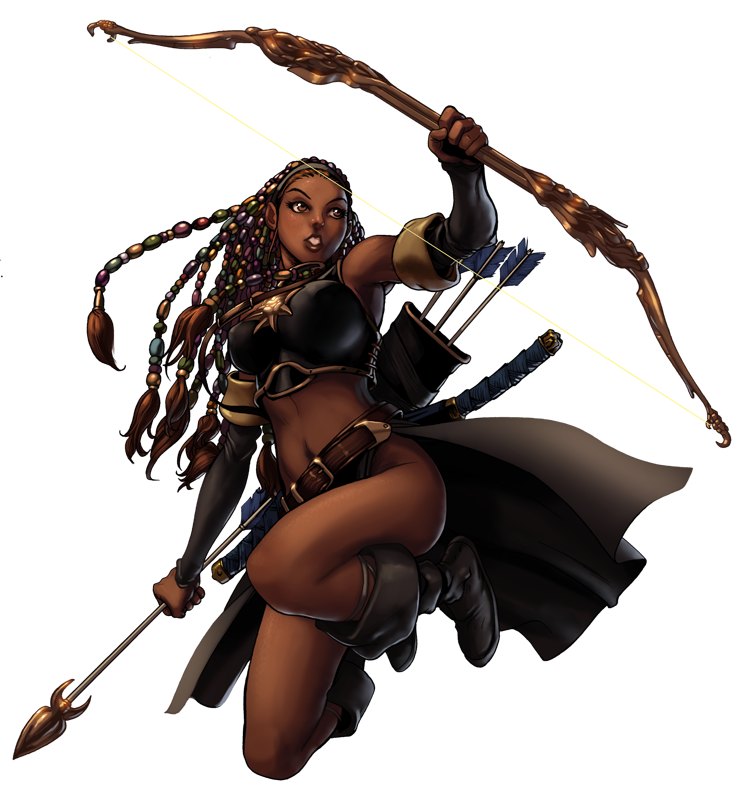
Well fans, here it is finally (and unexpectedly for some), the Exalted 3rd edition kickstarter. This is not a kickstarter for the game itself, but a kickstarter for two over-the-top productions of the 3rd edition main book (one made of METAL). Metal will run you about 350 bones, but you can get the deluxe version of the new book for about $125 thrown in the cess pot. Of course, I did it immediately because Exalted is the game that got me back into the pen and paper roleplaying game hobby after a long, long hiatus. Sure during this hiatus I ran a bit of Warhammer 2nd edition, and played some Pathfinder here and there, looked upon the D&D 4th edition rules languidly, and had a very fun but disturbing weekend session of a first edition module (slave pits of the undercity) using the 3rd edition D&D rules. The hobby, before Exalted came around, was something to diddle with here and there, but felt like something I did in the past. Exalted 2nd edition really started the fire of love for the hobby that I have carried ever since. It’s broad scope, it’s sensual and ultraviolent artwork, it’s mechanics (see below) and just being a massive work of fiction by a plethora of authors in the source books kept me reading and reading, even while Real Life was stripping away the ability to actually play all that much– but play we did and MOST of the time it was awesome for me and the players (well I hope)
And so begins another long post about Exalted. With all the praise and fans it got (and it got a lot), 2nd edition Exalted had problems, glaring ones actually; especially for a GM because it was incredibly hard to systematically run combats/conflicts the correct way using all the charms available to your enemies while remembering the player’s charms enough to give them a tactical run for their money. I remember as a childe running the battles in D&D at higher levels where the enemies would use their powers and monsters weren’t just a stat line (HD, hp, THACO and damage) and that got COMPLEX with Drow firing up their minor globes of invulnerability and geas and all that crazy shit. If it was too much for a Dew’ed up 12 year old to handle, how can a working adult with no time to prepare fare? Exalted is like high level D&D on crack even with beginning characters. That’s part of it’s appeal and part it’s problem. You have characters that can fly, that can never be touched by an attack, can disappear underground or if allowed to speak, can cajole anyone within earshot to fall on their swords– all of which is in the normal paradigm of powers of the Exalted. The issue with this vast array of powers is that they are fitted over the top of a very detailed and crunchy system with tons of numbers and dice and modifiers and almost too many options for players to deal with.
Let’s look a bit at the game’s economy– not money, but the stuff the player has to manage on their character sheet. First and foremost is Essence— where characters have a rating of 1-5 that determines a personal and peripheral pool of points they can spend in situations to use their powers. Second is health levels, usually about 5-7. Third is Willpower that also fuels some powers but is used as a rating as well, then there are Virtues that can be channeled for success at a task, next is DV (defensive value) that can be manipulated by actions and charms. Soak, which is either bashing or lethal (chracaters have both) and determines how much damage you can take before you take it in health levels, and last (I must have missed some here) is your Ticks for an action– how fast the action you are taking takes in game time– this ALSO can be manipulated by various means. As you can see, that is a SHITLOAD of stuff to keep track of and when you are a player, it’s daunting. When you are a GM with 5-10 characters in a combat it becomes …IMPOSSIBLE.
So a lot of people played Exalted and a few people eventually found some things about the system that were a bit broken (well a lot really) as in you could build a character that could not be hit at all by manipulating essence expenditures and essence gain via various charms/innate abilities– and you could do this at character generation. What’s more, these players argued, because some of the attacks in the game are incredibly lethal (and there is no resurrection) all player and NPC characters MUST use this type of character build to survive combat. They further argued that the Exalted in the game would know this and it logically applied that every character in the game would (if they could) have such a build. Unfortunately because of the internet, these builds got everywhere and while my play group may have sort of built their characters a bit this way, even a partial twink build like this made the combats even more frustrating to run and also made them incredibly LONG. While I complain about D&D and Warhammer Fantasy Roleplay because about half the time you attack you fail (the ‘whiff factor’) and when you do hit it does “damage” that really isn’t damage since everyone in D&D is either dead or 100% combat effective–and this made combat boring, Exalted’s combats can become boring for a completely different reason– even though characters have all these awesome potential attacks and can do stunts all over the place and it’s very narrative, because Essence is used to save you from dying AND fuel your attacks, players will not use their essence for anything cool unless they absolutely know that they will get a hit. Since the powerful antagonists ALSO have this going on– it becomes a long flurry of dodging and blocking with perfect defenses until everyone is asleep at the table in Real Life with no outcome. Rather than a fight, a real pub fight that is, any combat becomes a lot more about essence management than anything else. While that logically should be part of the game economy– it ended up being the only thing.
Since the last time I played Exalted I have searched for something LIKE it that can carry the weight of the system but without all the long crazy fights. While I read a bunch of other systems certainly influenced by Exalted (like Wu Lin and Noblis, etc.), I actually got to play FATE and Marvel Heroic Roleplaying. While FATE is awesome, I think Marvel Heroic Roleplaying’s system absolutely nails the ‘supers’ genre (where Exalted fully belongs except, of course, there are swords and spells) mainly because while characters have all this cool shit they can do but when they fight with each other instead of constant negation: SOMETHING HAPPENS. Fights between fully kitted out superhero teams plus whatever other fodder may be in the mix go like greased hole lighting because when Thor throws his hammer at the Hulk, chances are even in the comics where no one really dies– SOMETHING is going to happen in the MHR system.
So what I’m looking for in Exalted 3 is MHR. That’s putting it as simply as I can. I am cool with the D10’s and the base Storyteller system, but something has to HAPPEN in combat and it has to happen whenever a player rolls the dice. It’s fun to dodge all around and never get hit by Dragon Blooded hunt pack, but man 4 hours of that to wear down everyone’s essence and sneak in a single hit that turns an enemy to ash? No. The complexity of Exalted, all the stats, all the economy on the character sheet that needs to be managed, the tick-based combat, all of which in theory should work just breaks down when you are faced with tracking every character. While I the essence reactor twinking can be solved, there’s got to be a middle ground between super crunch complexity and playability.
In any case MHR has solved initiative in roleplaying games forever .