RPG’s of 2009 – the year of mega-complexity – part 1

I was pondering my own desire for a Great Simplification in my RPG playing and GM’ing over the last few years and it lead down a path of wondering what year was the height of RPG complexity across the board? Now, sitting in 2015, the OSR is going strong, Numenera’s cypher system is still rolling forward (and the Strange) and has some very simple mechanics, 13th Age has stripped away the grid of 4th Edition and created an extremely playable D20, people are swinging off the nuts of the extremely simplified, deconstructionist spoof of D&D: Dungeon World. What’s more, Hasbro’s D&D v5 released last year, and while still fairly complex compared to the latter three versions, it has also undergone a great simplification compared especially to the two previous iterations. The pendulum has swung to the simple, but when was it at it’s apex of complexity that gave the current trend momentum?

The year I feel people were playing (and had an appetite for) the most complicated RPG’s in the history of the hobby is 2009. Since that year, I gut-feel (I ain’t going to track down sources) like the RPG community, as well as myself has been yearning for a simpler style of play, one that invokes more imagination and less about mechanics and OPTIONS. Yet, in the early 2000’s, I firmly believe that myself and many other people wanted nearly infinite complexity in our RPG games, and anything less was ‘just fucking shit we played as kids.’

Where did this desire for complexity come from in the first place? Why did we need so many character/monster/spell options and all this minutiae? People designed and produced these complex games hoping they would sell, and there was obviously a market for each being as complex as possible. But why?

I’d like to divide RPG players into two (overly) broad groups. First, the 70’s set– people that were born in the 70’s and played OD&D when it was actually published. These are the Holmes, Moldvay, Metzner kids. The second group (again this is broad) are the Lord of the Rings kids that played or started playing D&D 3.0 when the LoTR movies came out. The boost of those films to D&D and RPG’s as a whole was simply huge and there is an entire generation of people that jumped into the hobby, starting again with fantasy, during this time. What were these two groups both influenced by to make them want exceedingly complex games in 2009?  How did D&D 3.0, designed by the same guy that did Everway and 13th Age, end up being so complicated and by extension– all these other complex games!

Magic the Gathering. MTG had a huge effect on all gaming everywhere from 1993 on. I would say MTG had as big an effect as the creation and propagation of Dungeons and Dragons itself. What MTG did for gamers and game designers is to create a desire and acceptance of a vast array of asymmetric powers. A MTG deck is essentially a collection of powers that players need to know, memorize and combo. Not only do they need to know their own deck, they need to know as much about all the other cards in the game that may be played against them as well. Roleplaying games hence started having massive amounts of variable powers– especially Exalted and Warhammer Fantasy Roleplay (who even had all the player skills on cards).  MTG primed gamers minds for mass asymmetry and a desire for the same in their RPG’s.
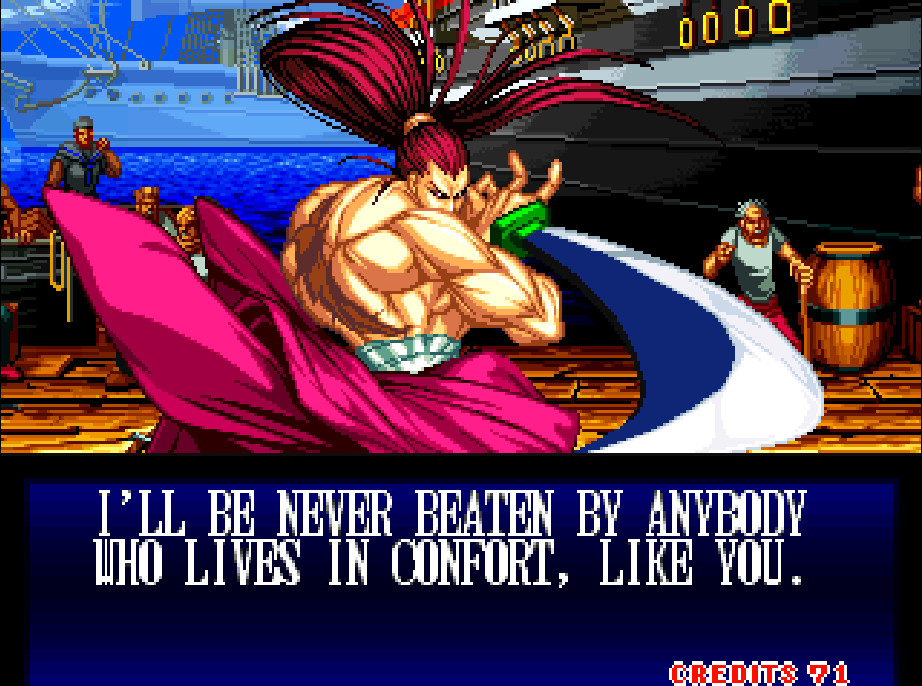
CONFORT
CONFORT–with 71 credits…

Anime, and fighting games. Especially Ninja Scroll for starters and EVERYTHING else since and by extension ALL Japanese fighting games. I spent food money in college playing Virtua Fighter and Samurai Shodown 2 and the adoration of those games culminating in Guilty Gear and Virtua Fighter 4/5 created an appetite for a system where your character fighting opponents gave the players tons of options, tons of character styles and special powers, conditions, everything. I believe fully that Anime and Fighting games were extremely responsible for the rise in complexity over the course of the 90’s and 2000’s. People eschewed the muddy murderhobos crawling around in dungeons for scraps with just a few stats and a single damage rating– they wanted heroes that could SHIN SHORYUKEN!!!  Combat, never a strong point or focus of old D&D (despite how we played as kids) became absolutely critical to RPG system design.  Once you understood what was going on in the fighting engine of King of Fighters or Samurai Shodown, it was hard to look at your PNP RPG combats the same way.  Reinforcing the trend from D&D 2nd edition– anime propagated that characters should be ‘heroes’ and not just some git with a sword and some rope stealing stuff from a tomb or abandoned dwelling.

Vampire and the D10 system. This is called the storyteller system but compared to story games these days (Hillfolk, Fate, et al.) this was really a ‘universal mechanic’ RPG more than anything. The really awesome thing about Vampire, which no one had done before well, were the variable player powers based on caste/clan.  Suddenly players were able to take a fairly straight forward (and broken until the Trinity version of the game fixed it) difficulty/successes system and layer in THEIR characters variable powers, and see how the whole mess worked together. As much as I am not a fan of the vaguely gay (remember it was still only the early 90’s–it couldn’t be blatantly gay which would have been much better!) vampire soap opera stuff myself, I, like many other, viewed the system with some sort of awe, but just wanted it to be turned loose on a genre that wasn’t so…. goth and metaphor for being a closeted gay dude. (this ended up being Trinity/Aberrant and Exalted). Because the system was easy to add options to–they did– so much…

Warhammer 40k/Fantasy: Especially the 70’s gamers started spending MASS cash on 40K and Warhammer stuff in general in the late 90’s and early 2000’s.  The game was extremely pervasive in game stores, being the bread and butter of many stores along with MTG.  Warhammer is all about army/unit asymmetry and tons of variable powers for everything, with customizable characters to the nth degree (we rip on “herohammer,” but that shit is fun both on and off the table as long as it’s balanced).  Since D&D was derived from miniatures games, 40K has a similar root.  Warhammer is the natural hardcore extension of Swords and Spells and Chaimail, both of which are awful in comparison.

Now, there have been many complicated RPG’s before 2009, especially in the realm of ‘universal’ systems such as GURPS and the HERO system (starting with Champions) as well as, arguably, TMNT (actually a really good game for it’s time!) and Rifts which really wasn’t that complicated except for all the character options and SDC/MDC bullshit (and mass addons). Phoenix Command, Twilight 2000, Rolemaster from back in the day were all COMICALLY complicated simulationist style RPG’s. These last three are games that, if you accidentally buy at a gaming flea market for a couple bucks, end up not on a shelf or drawer for later ‘research’ fodder or toilet reading, but get fired directly into the recycle bin. Yet, these games came out of an era where I think no one knew jack shit about how to design an RPG in general, the medium being all so new after all, so you have to give them a bit of a break unplayable as they were compared to (most) games of today.

Next post, three RPG’s that define 2009’s complexity to a C!
Runequest 6 – First big play session

Somehow, I convinced a pack of my knuckleheads (and my brother, who has little choice) to try out Runequest 6 last week with good results.  To be self-critical from the outset, I fucked up a lot of the rules, but my only real fudging of the dice to favor a player (I play with a GM screen still…) was probably one out of 20 or so where I accidentally let the player’s off the hook when they should have been chopped meats.  Making life hard on myself with RPG experiments as I tend to do, I converted a Lamentations of the Flame Princess adventure (Thulian Echoes) to Runequest 6 — not the easiest thing.  In this adventure, the characters find a book that details some people going to an Island about 1000 years before, but instead of reading the book or giving them the information, the players actually play through the ‘diary’ as the original peoples.  They are absolutely encouraged to cheese it up as much as possible to help the future visitors (which maybe them… maybe not) to the island if they can.  Needless to say, the Island is a fucking meatgrinder for the poor peoples of 1000 years ago.

I set the original party in 1605 England (summer, before the 5th of November…), where they were non-liveried members of the Mercers guild (read: street thugs) and just happened upon the diary while doing some shopcrastin and the like. My plan was to start off easy to get the players some familiarity with the combat system, the skills system is so intuitive these days that it really does not need much explaining.  The first combat against a near set of mooks (though anyone can kill you in Runequest really) went well and things that are quite different from most RPG’s like weapon size, action points, differential rolls, special effects were pretty easily understood– I think.  The selfish thing is, as the GM, I have had a lot of fun running Runequest combat so far because every dice roll matters– much like Marvel Heroic Roleplaying.  There’s no D20/WFRP:  “CLATTER -oh, I missed again” going on.  The players picked some fairly varied character builds, one was a 2 Action point beefsteak and the others were mostly rat-faced snipes who were more likely to toss a brickbat and then run then fight face to face.

Yet the second combat, once they had their new characters 1000 years previous, was a doozy, which ended up unfortunately being the remainder of the session, and absolute beast to run.  Four player characters + friendly NPC’s vs twelve Animated Statues is not a combat a new GM or group to Runequest should try to run.  While the players may not have noticed, a lot was forgotten and missed by this hapless GM.  I forgot when people had been wounded, I forgot when enemies had been over-pressed, forgot that some of the statues had spears, some had swords, some had shields as well, and I forgot to take into account weapon reach.  Someone with a spear can hold off an opponent until they can close range.  Again being self-critical first and foremost , I don’t think the players noticed much and had a good time because the MEAT of Runequest 6 is the combat and damn if it wasn’t fun despite the fuck ups (I did get the nearly obligatory “Chris is trying to cheat math” note that is often given to any of our group’s GM’s though).  Both of the main fighters went down (one out, one down with a leg wound), the sorcerer ran out of magic points after 5-6 castings of wrack and ran off, and the Pict was nearly killed multiple times before they were able to drop the last statue–and nearly all had to spend all of their luck points to do it. Whew.  I was imagining while playing what the combat would have been like in LotFP– these were 3HD monsters– so at least 12hp each, likely 15+ and weapons do half damage.  12 of these is a LONG fight.

Why I like the RQ combat
In the D20’s, characters just roll a die and do hit points of damage.  It’s effective when hit points are low across the board, and is fundamentally a timing mechanism for how long something can stay in the fight, but it’s so abstracted the characters in combat don’t make many choices, everything is a medium attack to no specific location. This works when shit is getting cleaved to the ground quickly, but vs high HD monsters, players often want to try something other than a medium attack to no specific location.

Contrast to D20’s, in Exalted, Fate, Feng Shui, and games that focus on the narrative stunting, the players have to create an idea in their head for what they are trying to do before any dice hit the table.  It’s fine to say “I flip [there is always some sort of flip in stunting descriptions] over the table and straddle the first guard’s neck between my thighs and then slice off the top of the second guard’s head with my cestus before I fire out my poison vaginal dart onto the first guard’s neck,” but what if it fails? What if the subsequently rolled dice say that that stunt absolutely does not happen— what happens then?  Runequest solves both the ‘a medium attack to no specific location’ problem that many RPG’s (and all D20’s) have and the pre-‘Stunting before dice hit the table’ by making the player roll the dice first, then there is an opponent reaction (if possible) and the results are applied– from this the narrative can be derived.  How does the system do this?  First, hit locations.  Your character knows what part of the enemy they have hit, and what degree of damage.  This adds a ton to the visceral aspect of combat.  Second, special effects.  Combat special effects happen extremely often– rarely was there an attack/successful parry for no damage (though this did happen), usually either the attacker or the parry-er failed or rolled a critical and one of the various combat special effects were applied.  This not only drives the narrative, but has specific system effects.   Unlike the free-form ‘consequences’ in FATE and Marvel Heroic, these are codefied completely– so players that lack in the imagination department (whether through fatigue or drink) can let the dice do their work for them, pick a mechanical effect that best suits their needs and let the narrative be derived. As a GM, I think this is quite awesome.

I could go on and on about the game (and I will eventually) but suffice to say that Runequest 6 is really badass and after making about 9 characters for the session and converting a variety of NPC’s and beasties, I can make characters in a VERY short time– my biggest gripe about the system really is that you have to have your players spend 300 points(!?) on skills (just like Call of Cthulhu) before they can get to buying equipment.  I’d rather it be like WFRP where you choose a class (say, fighter) then roll what career you were before becoming that class, and take the skills from that career.  The magic system requires a lot of GM pre-work which I was not a fan of for this session, but a small quibble since RQ6 is a toolkit system after all.  Would I convert another LotFP module? Maybe one of the big campaigns yes, but for the 2-5 session ones, likely not except for one I will not mention since one of the players sees this blog– I think there’s definitely a place for both Runequest and LotFP (and 13th Age as well) and I don’t want to try to change any of them to be more like the other– such as setting 13th Age (gonzo D20) in pre-modern Europe or adding hit locations to LotFP.  I will probably write more posts about RQ, but likely I won’t get a chance to run a game for a long time.

Dead men walking
scuttling blood-bags

Numenera: this is pretty cool

numenra8I don’t play Numenera but I have read the Player’s Guide and have the (giant) rules PDF picked up on the cheap. The book is beautiful, but I’m not sure about the game– basically there’s probably only one or two people I know that would ever even consider the setting interesting. I talk to a guy on my bus that ran it for about a year and thought the system was OK but then he switched to Dungeon World which is just a flavor-of-the-day spoof.

Anyway, Numenera sets up character generation as a phrase, such as “I am an Adjective NOUN who VERBS” and this site delivers these randomly which, frankly, for a new player is probably the way to go.

My deal with RPG’s is that I always want to try new shit, which is both awesome in that I get exposed to all the new RPG tech out their (which there has been some great stuff recently — looking at you Marvel Heroic Roleplaying, Tenra Bansho and Lamentations of the Flame Princess), but the bad side is that SYSTEMS don’t hold my interest very long. Exalted  2nd edition probably had the longest run as an interesting system, but what a beautiful and terrible mess that is.

That said, In seconds I generated the following character.  Give it a whirl!

I am a Cruel Nano who Reforges Completely

Pools
Might (Edge: 0)
7 + –
Speed (Edge: 0)
18 + –
Intellect (Edge: 1)
14 + –

Skills
Trained in all tasks relating to deception, intimidation and persuasion when interacting with characters experiencing pain.
Inability at all tasks involving discerning motives, feelings or disposition.
Training in understanding and identifying numenera

Abilities
Cruelty: When inflicting damage, can inflict 2 points less to decrease difficulty to attack target next round
Practiced With Light Weapons
Two Esoteries from the following: Hedge Magic, Onslaught, Push, Scan, Ward, Aggression, Distortion, Erase Memories, Far Step, Machine Interface, Mental Link, Resonance Field, Sculpt Flesh
Rapid Reforging

Equipment
Valuable memento from last victim worth 10 shins
Clothing
One weapons
A book about the Numenera
Three cyphers (chosen for you by the GM)
One oddity (chosen for you by the GM)

Notes
Pick a non-varjellan PC. You never understand that character’s moods or emotions
Shins
You have 4 shins to spend.
Cyphers
You can bear up to 3 cyphers.
References
Cruel
Numenera Character Options, pg. 20
Nano
Numenera Rulebook pg. 32, Players Guide pg. 21, Numenera Character Options pg. 10
Reforges Completely
Numenera Character Options pg. 73

numenera-booty
And an excuse to post a sci fi booty picture (art by Phillip Kruse (http://philippkruse.artstation.com/)


AMA with Mike Mearls

Lead developer on D&D 5.

Couple of Quotes:

“Probably the only mechanic I’m not crazy about is XP and leveling. If I could, I’d build a system where gaining a new class feature is driven by story-based prereqs. Like, you can’t learn to cast fireball until you’ve defeated a fire elemental and captured its essence, or after slaying the orc king a fighter can master a new battle axe technique.”

“More dice, fewer static modifiers. I’d use a die in place of the proficiency bonus. I like rolling dice and find it easier to teach that way.”

XP itself sort of sucks for STORY games, I loved when Warhammer Fantasy Roleplay came around and the GM just assigned a logical number of points after a session or couple of sessions.  And of course 13th Age where levelling up is completely via GM fiat — which is excellent.

Back to the old school though, I DO enjoy Lamentations/Moldvay style of XP where creature killing gives very minimal XP (fuck all that tracking) and the big haul of XP comes when silver and treasure are safe in some place outside the dungeon. Then you can take a natural break in the action and count out all the XP at the same time players are focused on counting out their silver coins.


Army Fucked

This is like a train wreck that I couldn’t look away from.  I watched nearly the entire 2 hours.  There are two videos, skip through some of the army review once you get the gist.  Mouth you will fucking love this.  This guy is being GENEROUS with his critique of these paintjobs splattered across such an amazing army to boot.  All of it looks like absolute hack shit–the vehicle models– my god what an atrocity against those sculpts.  I have no idea who the painting service is, but they won’t be around long.

Gencon Rundown 1: Elderly gay tennis courtier – An Hillfolk AAR!

I got to say the title of this post quite a bit during Gencon, first in reference to a real sad sack we have to deal with at the con but mostly during an excellent game of Hillfolk, the new award winning game from Robin Laws.

Now, I rip on Larping to no end, and stuff like Fiasco, Durance, Carolina death crawl and Hillfolk are about as close as I would ever want to come to that rather odd hobby, but these games are great and they have simple yet rules. While I like Fiasco, and Carolina Death Crawl is an amazing one shot, Hillfolk is a serious contender for the best of these types of games from what I’ve played.  This was a 3 day Gencon event hosted by a dude named Sam.

The scenario we played was straight out of DARK SHADOWS. Set in 1985 (pre-cell phones) somewhere in New England in a small fishing town where various families historically don’t like each other much and the patriarch of one of the main families has passed on. There were a few plot hooks thrown out (nothing obviously super natural in the beginning) and we were off creating characters. The character creation reminded me of the early versions of FATE, where you have plot devices and motivations attached to each other character. The created characters were awesome, there was me: an apathetic party girl from the main family line, some old doctor (the one that was called an elderly gay tennis courtier), a young man from a rival family, an evil half sister, an addict of a brother and a mostly scared all the time office assistant to the family. The GM spun all this into a crazy tale of horror and death, with our help of course. The main meat of character creation is that there are characters that want something from you that you won’t give up, like my bleached butthole in my character’s case, or something you want from another character that they won’t give you, like a pile of money to go shopping with, again in my character’s case. Each character is torn between two poles, and you will get bennies (a sort of in-game economy) if you act, and I mean ACT, in a way that shows conflict between those two poles.

Claudia Stone!

When you actually start to play (after character creation) you randomly get to create scenes. These are either roleplaying or some sort of task determining scenes (like a fight or sneaking around). Typically scenes involve you picking some of the other characters to talk with you about stuff. You usually want something from them and if you get it, or the other character refuses, you end the scene. The plot is not set, and is entirely dependent on the scenes that characters create. Some of the scenes were duds, like when you flip to some daytime soap opera and there is just some poorly written trash going on before they get to showing cleavage (I like the Mexican ones a lot more than the American Soaps for this reason). Granted, ALL of this is ad-libbed, so you have to give players a break if they’re not Constance Ford and if you are shy– ah… likely don’t play this game because you have to talk, and talk a lot about stuff that you had no idea was going on moments ago. Playing a female character for me was a challenge as many of you can imagine, but I nailed it enough to get a benny from the other players after the first “show.” I had to fall in love with one of the other characters which was sort of awkward as it was a dude, but awesome at the same time. During the rounds of scenes, the GM will interject plot scenes to move everything forward– these are likely completely off the cuff but are key as it seemed like character scenes were not the hardcore driver of the plot– we had to work around these obviously huge upcoming scenes rather than dive right in.

That said, towards the end I started getting crazy with my scenes, like a Soap that is hurting for ratings. Car crashes (hurling myself and other characters off cliffs), murder in the hospital, crazy talk and all that leading up to a blood soaked finale was amazing to be a part of.   There was just this amazing mometum that started happening about 5-6 scenes in: we had built up our characters enough to know generally how things would shake out, but no one knew what would actually happen.  The game ended with two players dead, two run away and an evil triumvirate taking shape to rule the town forever?

Final thoughts: Play this with extroverts, play it co-ed (an all-dude game, frankly, would not be very good unless your knuckleheads were good at playing women), and don’t be shy about bringing crazy shit into your scenes or calling people elderly gay tennis courtiers! (which is not my line, it’s from In the Loop BTW).  We were a bit too tame at first with setting our scenes, as the game could have gone berserk earlier, giving it a FEAST 2 vibe rather than like an 80’s soap opera that stooped to a Satanic cult plot to grab ratings.

This was the back of my character sheet, with the most important stuff during the game for the most part.

Lamentations indigogo: No Salvation for Witches

Likely the cover by the amazing Jason Rhineville

By the guy that did the Teratic Tome (A monster manual where everything has tits on it) and the solid sword and sandal hex crawl BAD MYRMIDON. Looks great. While browsing Rhineville’s art I noticed a pic for a sandbox LotFP module set during the English Civil War. If Better than Any Man was any indication, it should be badass and just horrifying at the same time.

Gencon cometh

Next week the nerdgasm of the year starts and many of my three readers will be there.  This year is ALL about the RPG’s with a new big shiny D&D version just out, a new version of Runequest that will be shaking it’s booty all over, a big shiny new book for 13th Age and Exalted….uh…. guess not.

Given the high focus on RPG’s I’m eschewing my normal Shadowfist tournament for playing some Dungeon Crawl Classics and 13th Age.  This isn’t due to not loving Shadowfist, but the new version of the game has moved in unfortunate directions, being simply a vanity project for the current developers and their kickstarter backers.

All that aside, I think this will be an awesome time as usual.  Most importantly:

BRING ON THE KILL LA KILL COSPLAY!!!!!

killlakill

COURAGE MONGOLOID!

Over the weekend, camping, we played Lamentations of the Flame Princess and it was good.  We didn’t play one of the awesome and horrific modules by James Raggi and crew, as the GMburger surprised us with some ancient B module (Horror on the Hill? I think so) that put LotFP through it’s paces… as a fighting RPG.  The best was that I got to play for once.  I’m usually the one FORCING various RPG’s down the fucking throats of my friends and acquaintances, but this time, I take a back seat and just sat and got drunk in a cloud of gandalf pipe-smoke staring blankly into space most of the time rather than being the always on guy that you must be as a GM. The following was played over a three day period in the woods in a tent with inordinate amounts of alcohol.  Decisions were made that weren’t good or tactically sound.  If you are looking for a method to get through this module, do the OPPOSITE of the following.

Leftovers
Leftovers

The story was that there was a village, near the village was a river and across that river was a hill. The hill had an old monastery on it that was filled with horrible things.  We went to kill those things and take their stuff at the behest of a wandering cleric who got to go first in the marching order.

Party 1 (foreshadowing?)

Hintern Geshlects – Specialist (me)
Changeous Botlinger – Fighter
Snatchus Maximus – Fighter
Ashtell Lumberman – Magic User

Everyone started with level 1 characters. There weren’t any stand out characters in this mix (like a: “holy shit it’s  +4 character!”) either.  Character creation is very fast and extremely solid. As a system note aside, your character must have at least a zero in all bonuses (13+ gives a bonus), so you can have a -2 to say, charisma, but a +2 bonus in strength to zero out or you toss out the set of rolls and roll again. After your rolls, being able to switch two rolls, say from charisma to strength, is huge and easy, without all the +1/-2 bullshit from Moldovay Basic.   The way HP is calculated (roll or take a default) among other little tweaks makes the LotFP system of character creation is fun and very fast, which is good as you die a lot.  The slowest part of generation is the equipment buying– which needs to be very thoughtfully done of course or… you will die a lot.  I played the Specialist and took dots in Stealth, Sneak Attack and Search.  The placement of these dots are VERY important if you are playing a Specialist because you simply cannot take enough skills to be what your party needs you to be at first level, and you can’t fight well either.  I found sneaking and surprising enemies nearly impossible during the game because I spread my dots around so pretty much gave up and just got stuck in with the fighters.

The magic user luckily rolled the SLEEP spell for one of his initial spells. Both fighters were sword and board for this run to max AC.  Everyone had leather armor at least.  We were fucking ready!

The adventures started in… a tavern where the party met some sort of cleric named Darius of Specularium (isn’t that the thing to check for genital warts inside a woman?) that bade us to join him raiding a monster infested monastery on a nearby hill that had been shunned by villagers.  We…agreed, secretly knowing we would kill him as soon as possible to maximize XP splitting of treasure, at the end.  We had to pay a fisherman 10sp to cross the river (and vowed to kill him too when we got back) and up the hill we went.

After scouting for a long period of time, we immediately wandered into a room with a couple of drunk Ogres.  I failed to sneak.  Failed to surprise.  First level characters vs 2 Ogres?  YES!  With luck that would soon run out, we were able to take them out without any casualties.  Inside we opened their meat lockers that contained a group of  still living cro-magnon mongoloids.  Luckily, our Magic User spoke their gibberish tongue  (in LotFP you have a 1/6 chance of knowing any language you come across) and was able to get two of them to join the party while the other two ran back to their mongoloid caves.   The mongoliods:  Grum and Frum, became our meatshields instantly and there was rejoicing.

After this brush with death, we found something akin to the greatest treasure possible for Basic characters– a fountain that when drunk from had the potential to increase STATS.  Not heal, not grant a bless, but PERMANENTLY increase stats.  While my immediate idea was to shit into the fountain, as is my wont, Darius the NPC priest (meatsheild 1) drank first and felt good, so the rest of the party drank. It was a stat increase FIELD DAY for everyone. Really we could have walked away from the adventure at this point and been considered winners, but we went on.

Sneaking around we found a massive weapons cache, enough to get us up a couple levels if we got it back to society.  We were able to grab some spears and arrows and such before getting into some more fights in the halls nearby.

Soon, clomping around in armour with torches (we bought torches and lanterns, remember this when travelling underground) we got into a couple of very big fights, with what I think were hobgoblins and bugbears. I won’t bore you with the details but the gist was that the magic user cast sleep on some sort of high priest in PLATE MAIL and he was stripped of it and taken to a nearby torture chamber to be thrown on the rack to find out where more treasure was.  During torture, he wouldn’t give up anything but yelled a lot, you know, in pain, and all that. All we wanted was a few large sacks of gold. While fun, this was not a very good idea. Reminder here that we had drunk some before and during.

GMburger. This was not a face for the camera.

During the torture, my specialist tried to set up a bucket trap by the door. This entails opening the door a crack and setting a bucket on top balanced with hot oil in it.  I think normally this would be simply allowed as it was so basic, but since we were playing where Tinkering rolls had to be made to create any type of trap (per the rules) I had to roll a 1 on a sixer– and it just didn’t happen for 10+ turns (100 minutes of in game time).  The GM had no choice but to roll wandering monsters and so they came barging in spraying the hot oil everywhere.  Characters nearby had to roll vs breath weapon or take a D6 damage.  Naturally my specialist failed and took the FULL SIX POINTS, dropping him instantly.   Even though some of the hobgoblins succumbed to the oil, the onslaught was too much for the party– after slitting the evil priest’s throat, both fighters (one now in plate mail), the NPC cleric and BOTH meat shield mongoloids were dropped.  Beating a hasty retreat, the Magic user was able to run away to the safety of the river bank.  Total XP: 57.

Party 2

Having recovered for a couple of weeks, the Magic user raised another group– this time (naturally) all fighters.

Tor Horst – Fighter (me)
Snatchus Maximus 2 – Fighter
Nerdlinger – fighter
Ashtell Lumberton

We didn’t have our meat shields of the cleric or mongoloids, so the party walked and found the Mongoloid cave and asked the other two cro magnons we saved to come with us to help. Reluctantly they said goodbye forever to their mongoloid loved ones and followed us back to the monastery.  Next, of course, we all went to the fountain of free stats and drank.  This time it wasn’t all good and Nerdlinger was cursed with paralyzation so we had to wait 8 hours (we left him lying in the fountain) until he woke up.  What’s more, because we found all those supplies, we told him not to buy any equipment, so he did not.  He wouldn’t live long.

We were able to sneak into the bad place again and actually find the specialist, who had been tortured for a couple weeks but wasn’t dead covered with his own faeces and in a pool of urea in a mouldy jail cell. Nearby both fighters’ corpses looked like they had been burned an partially eaten. We had one of the Mongoloids carry him back to his tribe’s cave for healing, deeming that if he tried to get into town with what looked like a bloody sack of meat, he’d be killed outright.  Before we could get to the armor and supply casche, there was a fight and Nerdlinger, without armor or a weapon, was instantly killed.  John rolled up his third character and then passed out.

Descending deeper into level 2, we were able to find a secret door to the evil priests’ quarters and raided it.  Within were some scrolls, some platemail, and a chest which no one would try to unlock without a Specialist.  Seeing the pitiful level of XP the only surviving character got last time, and since one of the fighters was already dead, we high tailed it back to town with about 600 Silver pieces in tow, as much armor as we could carry and the priest’s chest (still unlocked).  Because we stole three suits of platemail (1000 SP each) we were able to level up– and for me things got ridiculous.  We started with Max HP per the GM, and for 2nd level I rolled an 8+1 for constitution–for a total of 18 HP.  At level 2 this was crazy high.  With full plate and a shield plus a dex bonus of +1, I was also walking around with 19 AC. I could tank. Imagine that…

Party 3

Ulog (Mongoloid NPC)
Tor Horst – Fighter Level 2
Cornelious Pubic – Fighter Level 1
Ashtel Lumberton – Magic User Level 2
Snatchus Maximus 2 – Fighter Level 2

Ready for the third foray, Party 3 was a lot harder than the first party.  Being 2nd level you could take some hits, not many, but you weren’t going to be one shotted.  Of course, not everyone was a 2nd level character yet…

We headed immediately into the fountain area and got into a fight at the entrance to the Monastery, the generic non-humans getting wise to our raiding.    This ended well– cutting a swath through “bugbears” and “hobgoblins.”  Unfortunately for Cornelius Pubic, the fountain was not kind and all of his stats dropped by 1.  He now voluntarily took the meatshield spot in the party.

The party delved deeper and found some sort of foundry and after another fight with bugbears and hobgoblins of generic non-human varieties, we found some fat bearded man chained to the wall obviously forced to smith for the non-humans.  Freed, he was placed in the front rank and given a hand weapon of the generic variety.

cro magnons
Fight on MONGOLOIDS!

Shortly after, we found some sort of large room with some dogs near some rotting corpses.  I said quoting Blood Meridian “I CAN MAN ANYTHING THAT EATS!” and got some meat for them.  We manned both dogs and were able to rob their old master’s corpses to boot.

After this we were nearing, notable from GMburger’s excitement, the first boss fight.  It was never to occur.  After finding some kitchens, some hobgoblin cooks ran off.  We tried to run after them but they were too fast.  The Magic User would not release his dog to chase them down (a sure kill) and so a large fight ensued as the cooks alerted all other hobgoblins in the area to our presence.  Cornelious Pubic, the first level fighter, was one shotted. That was the third character to be mulched for John during the sessions.  The blame game on Matt (the magic user player) for not releasing his dog will never be lived down DESPITE John playing most of the game sessions in Orde Wingate fashion (i.e.: lying on a cot).

Next we found a temple of some forsaken God that had jewels for eyes.  We had the mongoloid, UNK climb the statue and peel out one of the jewels.  As he did so, some large fly-like creatures attack from a hidden pit in front of the statue.  Gareth Silverhand, the NPC smith, died instantly and in an epic action, UNK succeeded in a FLYING grapple onto one of the flies from the top of the statue.  After this they were easily dispatched, and Unk was coerced into climbing down the pit to check it out.  Nothing was there, and moments later in a nearby hall, we all fell down into a pit trap slide (likely to the third level).  With this, out of fear, we took the stuff we nicked and got the fuck out of the monastery for good.

Thoughts and Feelings!

First, having three fighters in this adventure was essential.  Though we were stupid and did idiotic things like leave bodies everywhere they fell and make a lot of noise it was negated a bit by being able to use charge (attack for double damage), Press (+2 to attack, -2 armor) to drop hobgoblins left and right. And at 2nd level, get a +4-+6 attack bonus.  Tactically, we had tanks in the front and the weaker characters or hurt fighters would hang in the back rank with spears (still able to attack).  We ruled that they could press from the back rank, giving +2 to every attack with no drawback since the front rank fighter would take the hits. This worked well.  Tor Horst, with his 19 AC and 18 HP feels like a complete badass compared to his scuttling bloodbag first level self.

Secondly, being a player this time, I was able to bask in the glory of a rules light RPG without all the fucking bullshit of modern RPG’s. The character sheets are not crowded with skills and special attacks and roleplaying triggers and all sorts of that stuff.  You are able to focus on the game at hand and your character’s actions rather than what’s on your sheet.  While I like high powered gaming and happily run a 13th Age game (and eventually Exalted again), this was a breeze to play.  Combat was relatively fast (though very boring in long fights which were the staple of the B series of modules).  Whether this would standup to later levels of play, I’m not sure.

Third, sense of accomplishment was awesome. We played absolutely terrible people doing terrible things in the wilderness. Psychotic fighters, a lying, thieving specialist and a fear-wracked magic user who left his friends to die and would do so again most likely.  Contrast to all the YOU’RE A HERO! type games and current milieu of Pathfinder and the like it’s a lot less.. constraining.  In many other types of games you explicitly play a ‘bad guy’ who really ends up being a brooding Wolverine trope that comes through in the end while being mean most of the rest of the time.  Not so with Lamentations and by extension, the characters we played as kids– all characters seem fully insane at nearly all times.  When you survive as a first level character to 2nd level, which is NOT easy at all and not even likely, you feel great.  Basic D&D and Lamentations of the Flame Princess are HARD games to succeed at.  XP does not drop from the sky like blood rain when you cut a swath through enemies and gold and silver and jewels are difficult to get back to civilization.


Iconic
Iconic

TL2 Hardcore Victory!

victory

While I used the Essentials mod while pulling this off rather than vanilla, I finally got my Veteran hardcore badge for Torchlight 2.  I still am only about level 34 in Elite hardcore– and I do NOT like my build very much at all.  The lack of farming and the really really difficult and long fights you encounter in Elite mean it may be…ah….never before I get the elite hardcore badge.

It was a good run.  I learned a lot about the berserker– I’m no expert but getting there.  I used Ice with northern rage as my AOE and Raze as my 1 on 1 attack.  I was doing massive amounts of damage with Northern Rage at the end there and had a power that would proc to increase casting speed by 50% or so which made Raze crazy insane.

Offense means very little in hardcore though, it’s all about the defense.  Having over 600 armour and 400-500 in every resistance is an absolute must.   The only way to do this efficiently is to run a shield.  Always always run a shield in hardcore, regardless of your class.

That said, I lost a lot of characters pushing through to the end.  Here is a list of the fatalities:

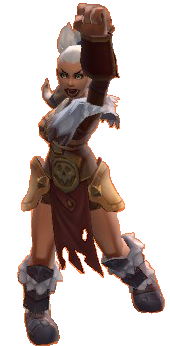
Buttdust_0 – level 32 Embermage-– died in Korari Cave (got caught in one of those bone traps and couldn’t get away).

Lipstitch – Level 8 Berserker – The Bone Gallery (oops!)

Dead Rose – Level 22 Berserker – Watchweald Temple

Poofias – Level 51 Berserker – The Broken Mines Floor 7: this one hurt emotionally since it was right near the end. I didn’t have my electric resistance high enough…

Poofias 2 – Level 22 Beserker – Watchweald Temple (again!!)

Vagisillica_0 – level 44 Berserker – Forgotten Halls floor 1. Just a bad mistake IIRC…

Vagisillica_1 – Level 44 Berserker – Blightbogs. This was on a critical hit from a champion troll. However I got overconfident and ran a pistol and sword rather than a shield. Stupid, stupid stupid.

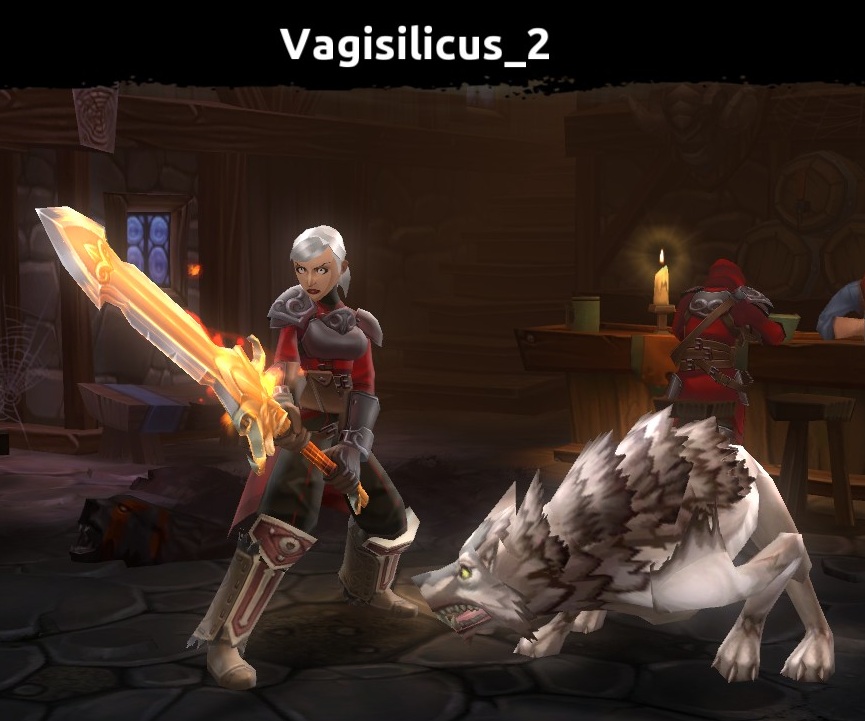
And the final iteration of the berserker that pulled it off:

Vagisillicus 2
Vagisillicus 2 – the two handed sword is just for show.