Anally Proficient Virgins and the books I read in 2014.

I read a bunch of history stuff this year along with my usual sword and sorcery and noir pap and these are some random thoughts on each if you have an interest. All three of these are extremely accessible for the non-historian, and with the exception of the last one, are quite short to boot.
persian

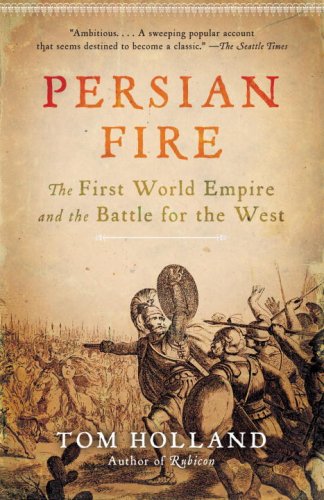
Before reading this book on the Persian Empire (and Meades and Assyrians by extension) I had no idea what cruising meant in Sparta, I knew it as something people did with muscle cars down on the south side.  Yet, it has a different meaning when applied to Spartans.  We have this vision of the austere, martially focused and hard-hearted Spartans going to war together and fighting against the decadent Athenians and Persians. Well they were all those things as you had to kill a HELOT during your early teen years as a right of passage (yes, in the movie I know it was a tiger or wolf or something, but in real life it was a person and it wasn’t a straight up fight/kill, it was supposed to be a sneak-kill to boot), and they lived in barrack most of their lives.  Despite being all bad ass in the movies (which to some extent they were in real life) the actual citizen Spartans also had people to do all their work (Helots: who were basically slaves) and  were always worried about the helots revolting, which they eventually did. None of these things may surprise you, but Sparta’s habit of cruising might. Basically, once you got to be about 12 you could be legally raped at any time by any older members of the city (not Helots!). Girls AND boys would both be raped, and for the boys usually they would get other types of favors from their male rapists after the deed or deeds. The girls, of course, were not allowed to get pregnant while being cruised, so it was up the bum and no babies for them too.  The title of this post comes from a line in this book describing Spartan wives as anally proficient virgins out of the gate. Quite disturbing and really one of the punchlines of Tom Holland’s excellent PERSIAN FIRE. For me, this book filled a gap of pre-Persian empire history between the Assyrians and the Persians attacking Greece across the Hellespont and Marathon and all that.  As one of the best currently working narrative hostorians, and like Holland’s RUBICON, it’s highly recommended.

gaul

Secondly, I re-read Caesar’s Conquest of Gaul. This was an amazing read as it’s written by the man himself (in third person no less) about him dismantling in detail the petty empires of southern and northern France (with the Germans getting in the mix a bit too). There are a few pretty disturbing parts due to things NOT said rather than what Caesar is writing. For example, one Gaulish town that had a big wall around it had a Gaul army swing by for a visit despite the townspeople’s wishes since they were being pursued by Caeser.  Soon after, the town became surrounded by the Romans who they themselves built a second wall around the town and then an OUTER wall to protect their inner wall from counter attack. The Army of Gauls that were in the town ejected the town’s original inhabitants (you know, the old, and women and children) but they had no where to go as Caesar would not let them through his walls– so they stayed outside the town between the walls until they fucking died of exposure and hunger. So, I think it was Dan Carlin who said something like– ‘go ask the thousands of people that Caesar killed if he was a ‘great’ man or not.’ To the Gauls, he was a right bastard for sure. Like Machiavelli’s The Prince, Conquest of Gaul is a pretty good handbook on how to fuck people over and how to not get fucked yourself in real life, as well as a poignant view into one of histories greatest figures.

mirror

Lastly in the history area is a friggin’ monster of a tome I picked up on a whim and found was as amazing as it was horrifying. A DISTANT MIRROR by Barbra Tuchman details 1300 – 1400AD in Europe (mostly France and England) during what I think could be the worst time in history for human beings on the planet Earth. This hundred years, in France especially, make the Dark Ages look like a fucking Mayday Carnival in comparison. The Black Plague depopulation, a completely corrupt and luxury focused Catholic Church that goes into a non-protestant Schism (it wasn’t about doctrine, there were just two popes at once and neither would abdicate) whose response to the black plague was to increase the price of pardons and the like to those who were left and who would persecute ascetic monasteries who weren’t as greedy since it made the actions of the mother church look bad, and let us not forget the Free Companies that ravaged France and northern Italy for the early part of the century. Lay on top of that completely destructive private wars between noble families (like some sort of West Virginian blood feud except these people had lots of money and castles and towns and cannons) and you have a simply horrifying hundred years. The book loosely follows the life of Engerrand De Coucy, an actually pretty swell noble who owned a massive (now destroyed) castle in Picardy during the century. I recommend this book heartily but it is extremely LOOOONG and took me a month or so to push through. It’s also quite amazing to me that a book of this sort was written by a woman.  If you are looking for  some of the historical influence to A Game of Thrones or Liebowitz and the Wild Horse Woman (who’s central plot is the schism in the church), this is a singular read.
Rome Total War 2 is now what it should have been

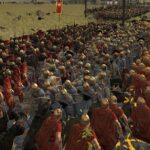
And it is now in the realm of pretty fucking awesome.  Last year, if you bought Rome: Total War 2 it was a bit of a mistake for everyone involved, players, developers, fans, families of all involved.  I’m a long time fan of the series, having started with Medieval Total War back when it was sprites on a 3D map (looots of spriiites!!!) and it was a great game,  though the fact that it was one single fight per territory (you didn’t move your armies around inside territories in the older games) made it a bit small.  Reminiscent of Ghenghis Khan 2 by KOEI, it was still totally awesome.   Rome 1 brought the jump to 3d and was, along with Warcraft 3, the best game of the decade. While the newer games were amazing in their own right, especially Medieval 2 and Napoleon Total War, something happened during the second run of the Shogun Series to sour me on the battles– and while the strategic part of the game is important as a framework– it’s all about the fucking battles. Suddenly, they felt cartoony and too fast and too arcade like, which is silly to say since the graphic details went through the roof in quality.  When I first saw the asymmetric uniform designs of the units in Medieval 2, I got a huge claymore-sized boner for real.  Yet the battle gameplay in Shogun 2 was not good despite the game’s overall polish, I just could not get into it.  Rome 2, at first, followed suit much to many player’s disappointment.

With a series that has so much going for it, and has such pedigree it was shocking to me to suddenly get a Roman Shower from the company with the 2013 release.  I  played for about 20 hours (a SLIVER of the amount that I would normally play a big TW release)  and uninstalled the fucker until a couple months ago, when I noticed that some of the guys that make TW battle videos had switched back from Medieval 2 to Rome 2 after apparently giving up on the game.  I checked out some battles and noticed that formations worked much better, phalanxes actually PHALANXED and the archery didn’t look so shitty like it did in Shogun and Early TW.   Added to this, the Emperor Edition upgrade was free to all previous purchasers which included a massive campaign detailing the Roman Civil War.

Now I’m merely 85 hours into the grand campaign and I can say I won’t be going back to any of the other Total War games for a long while.  Over the year since release, they shined the hell out of this game.  Performance is much better, the battle AI, the battle mechanics and the flow of the game has been completely tweaked.  While battles are the most important core part of the game, the campaign play is actually where you spend most of your time and it’s far superior to the launch version.  The AI especially is now quite brutal and with suprising frequency will cause you all sorts of problems– including sea borne invasions which were impossible for the AI to pull off before Napoleon Total War (just a few versions ago!).  So you could sit as England or Italy and just send out armies to conquer everything around you on the ocean, with no chance or reprisal. Not so anymore.  I had a really tough time as Rome early on. What’s brilliant about the AI now is that if they percieve you are strong, they won’t mess with you, but if you are seen as weak, like losing a bunch of battles in a row, they will join in and try to take a piece of you before someone else does.

Later in the campaign game it becomes less about gobbling up small kingdoms and more about HUGE wars that take decades and decades to finish up (if ever) with massive empires.  Since coalitions of factions normally stick together, and factions will become client states of you (unlike other TW games where the option was there but they never would actually do it), sometimes taking out a small kingdom on your border leads to war against EVERYONE on the side of a map.  I found it out the hard way when I accidentally went to war with the entire Achemedian empire (Persia and the like).  I was able to eventually take the war to them, but not before many legions were swallowed in the desert and mountains of Asia Minor…

So here are a bunch of pictures.  This is a long post about a really great game that finally came into it’s own.  I think the developers have done right by the series after a really fucking huge misstep last year.


Yay: Reformation!

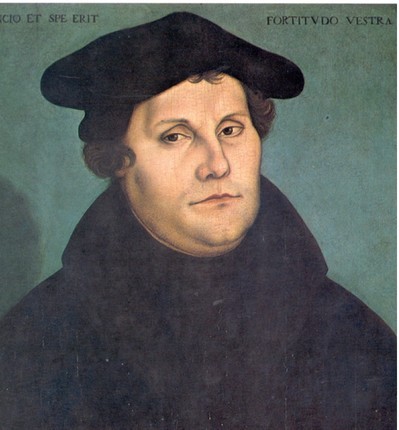
Dan Carlin, after the massive Mongol series, posted a podcast about the Reformation.  All good stuff.  This is shit you were not taught in school at all.  Pure fuckage.

luther

Crassus, Cicero, Calius, Clodius, Caesar, Cato

Cross it

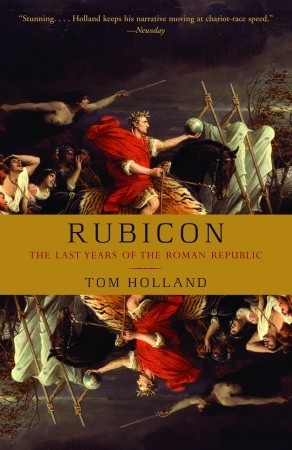
I just finished Tom Holland’s “Rubicon:” a narrative history of the end of the Roman Republic: i.e.  the part where the senate mattered to the part where the senate didn’t matter any more (except to complain about stuff and get horses appointed to it) along with a lot of fighting.  It was extremely fast paced and well done and if you want to delve into a little piece of Roman history (well, a big piece actually)– this is definitely a book to pick up.  However, and this is no fault of Holland’s, one section of the book  (right before the formation of the Triumvirate of Crassus, Caesar and Pompei) deals with so many historical figures with a name starting with ‘C’ that it becomes totally insane to keep track of them.  I personally got Crassus and Cicero confused MOST of the time, which is ridiculous because they were drastically different people.  Once you get to the next tier of players (Calius, Clodius). it’s almost comical trying to keep track of people and what they did before to lead up to what their doing (and eventually, of course, how they got killed).  I only remembered Clodius because he’s the dude that dressed as a woman to hide in Caesar’s house during the women only ritual of the good goddess and got busted for it.

I would describe this phase of Roman history as the thug showdown at a massive scale.  With the exception of Cicero and Cato, the rest of the bunch, including Octavian, were total gangster thugs when in Rome and pretty much the same outside of it.  The sad fact was, however, that there was no way to survive at that level without being one FULLY.  The last man standing, of course, was Octavian who, having spoken to people who lived through Marius/Sulla and the Caesar/Pompei showdowns was fully prepared to do what needed to be done to gain total power over the Republic.   Anyway, give it a go.  As narrative history, it’s written to not be boring dry micro history or entirely academical historiography, both of which have their place, but maybe not for you.