Germans vs Brits. This is long and ramble-esque but gives a good feel for the game. It’s tough to go by turns because, while Bolt Action has turns, it’s more about game events than the clicking over of Turn 2 to Turn 3 like many other games.
The scenario was very interesting, one where if I could have gotten away without firing a shot, it would have been ideal. Looking forward to more games of this, especially since I didn’t have to put together my own plastic infantry!
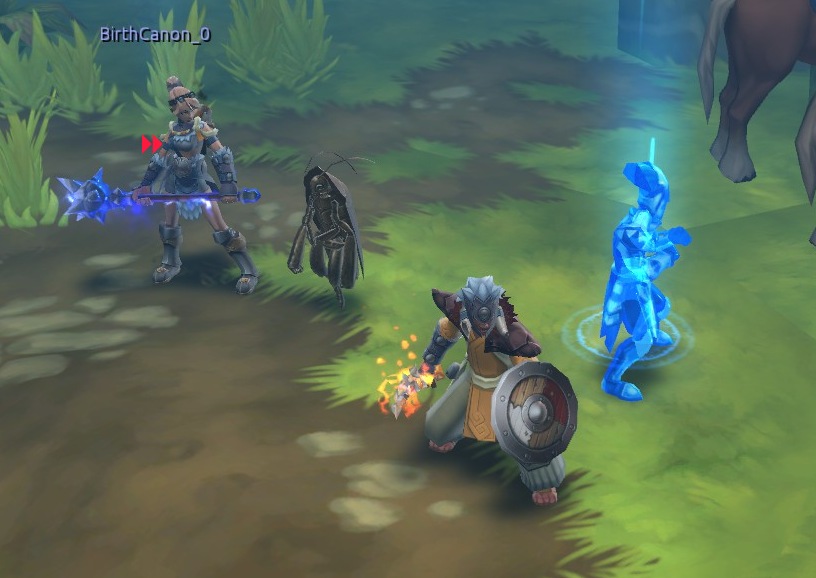
One of my first Kickstarters, pledged so long ago that I have forgotten what the game actually is about, Banner Saga has released to the public. When it came out on Steam this week I thought to myself– I backed this, how the heck do I get a copy of it?
Not only did I back it to get the game, I backed it to add a clan banner which of course I forgot to do and was really a total waste anyway.
Banner Saga is a turn based tactical fighting game with VIKINGS (see I knew there was a reason I backed this fucker) and I’m looking forward to spanning some times with it over this week, after which I will do my typical feeble and uninformed review.
…and RPG rules for it are typically tacked on to the main system and don’t do it justice (some hand wave it away completely–I’m looking at you 13th Age!) or SUCK.
Look at the following video from “Battle of the Nations” which features real armor and blunted weapons for combat. Granted they are not trying to kill each other (no stabbing), but I think a lot of what’s happening here is very close to what we’d see in a melee on the battlefield, or a fight between armored opponents in say D&D. Again–this is between armored opposition who use their weapons as clubs. A non armored opponent would have to be extremely good to beat someone in armor like this mano-y-mano (also because someone in medieval times would be extremely good to HAVE armor like this).
Think about the following factors:
1) It’s nearly impossible to breach the other guy’s armor with a strike from a weapon. You could knock him out or damage him (legs, arms, etc.) but you’re NOT going to land a killing blow unless you know exactly where there is a chink in the armor. Even then, the hit area would be tiny as to make it nearly impossible. Say in D&D you have hit points which do not indicate lethal damage (ever really), and Warhammer Fantasy Roleplay wounds that represent your ablative-ness before you start taking critical wounds. Exalted/D10 acknowledges lethal and non lethal damage, and armor reduces both–usually lethal is HARDER for armor to reduce in these systems, but I would argue that lethal damage should be the easiest to buffer against (or soak). Essentially, armor should be far better than it is represented in these games based on the video above for stopping cutting/lethal damage.
2) Once you fall down, likely you’re dead, before you fall down, you can still fight if you’re not grappled.
3) If you’re grappled, your chances of harming your opponent is near to zero, but being in a grapple also reduces the chances of an opponent harming you, so it’s a viable defensive AND offensive tactic.
So look at how the medieval guys in the video fight. One guy gets close, exchanges blows as a DISTRACTION for the grapple, at which time a second comes along and whacks at the grappled opponent’s legs or head until he goes down. Once down the opponent is typically out of the fight and can be dealt with later if not killed outright.
How would OD&D model this? Not very well in the printed version but there is this super obscure rule that was never properly published that makes more sense. Modelling the video above, Fighter 1 would roll to hit with a D20. This represents a series of blows in D&D remember, not a single attack. If a hit happens (since it’s ‘harder’ to hit someone with armor on) then it will do some damage in terms of hit points. The opponent would attack back and then the third guy would come in with a grapple attack which starts with a successful hit (including modifiers like armor which should actually make it EASIER for someone to grapple you), then goes to an opposed roll, etc. The thing is, if you watch the movie above one notices that grapples happen EASILY all the time.
This is some serious grappling.
Warhammer Fantasy Roleplay (2nd edition) has some rules for grappling that work well for the system– both the grappled and grappler have +20% for people to hit them and cannot block or dodge. The grappler can attempt to inflict unarmed damage during his or her turns and the grappled can attempt to escape and that’s it. It models what’s going on in the video above just fine though doesn’t model people being thrown to the ground nor the grappled being able to do damage (I would mod it to just say that he could attempt to do unarmed damage to the grappler just the same). 3rd Edition WFRP has– you guessed it! A card. As much as I wanted to write this and have it thoroughly researched– I just couldn’t be bothered to dig through all my 3rd edition cards to find it.
Despite it’s issue with Lethal/Non lethal soak of armor, Exalted’s grappling I would rate as good, mostly I think because White Wolf did the Street Fighter RPG (and Aberrant) and had to deal with this then, as well as the Vampires gripping each other in their pseudo sexual way. Grappling is an attack and the attacker, if successful, can pull an action (crush, throw, maintain) but each turn that comes up the grapple is contested, with each winner of that round able to crush, throw or maintain the grapple. Exalted does not let armor help you not be grappled (like D&D) which makes sense.
Finally, we’d be remiss if we didn’t talk about Marvel Heroic Roleplaying/Cortex and FATE as they model it fairly well in both. In MHR, any grapple would be a complication die stuck to an opponent. So, if the THING is trying to grip Wolverine and got a D10 effect die, he would stick a D10 complication on Wolverine for everything he’s doing (as a negative die) and it would be a D10 that others could use to hit Wolverine when they attack. Invisible Woman could add a D10 to her (weak) punching of Wolverine and whenever Wolverine tried a non-opposed roll, he would have a D10 complication. Note that this D10 complication would be the same if the Thing punched Wolverine into a wall (and trapped him) or sat on him– the system doesn’t care what the type of complication is, except within a narrative context.
In FATE you are trying to create an advantage over your opponent by grappling using an opposed roll. You can give this advantage to another player, so it models fairly well after looking at the Battle of Nations video. However, the issue I have with both FATE and MHR is that the GRABBER should have some negative complications as well as the grabbed. Both are in a grip, and neither may be winning. If one can overpower the other he may be able to hold him in place long enough for another person to smash him over the head, but it’s possible that they may miss and hit their buddy. You can see how it’s a very complicated thing to model in any game (not just RPG’s).
I know this started out as a bit about armored combat, but it’s expanded a bit into a tirade about grappling in RPG systems. I think it’s an extremely important part of fighting, one that cannot be hand waved off and must be simulated, especially in combat with heavily armored foes who use their swords as clubs until the very end. Tactically, grappling is especially important when outnumbered– you better watch out because those Kobolds may drop like flies, but there are a lot of them and if they kobold-pile you, you may be skewered on a spit thrapple to anus before you know it.
Like Diablo 2 with the Zyel mod (a collation of other mods + an awesome crafting mod), we’ve been waiting for a definitive collation of good mods for Torchlight 2 and here it is in “Torchlight Essentials.” The issue with mods is 1) which to get, 2) making your friends get the same ones, 3) getting games where everyone has the same mod. Collections of mods in one package,in my opinion, are essential to reduce the insanity. We tried it out Friday night and it was superlative.
New Pets!
The mod has a new class that mixes the mage and a close in fighter, the official 8 player muiltiplayer mod, the two mods (Blanks and Extra Chunky) from the Runic developers and a host of other vetted mods. Highly Recommended.
I have been holding off on this post because the 13th Age core book was maaaaaat’s Xmas present and didn’t want to spoil it, but now I can wax on and on about how I think this is the version of D&D that I will actually run. It’s got the D20 crunch and leveling with a lot of stuff from FATE and Feng Shui that I’ve grown to love over the years. The game is a product of the two developers of 3rd and 4th edition D&D and represents, as near as they can agree on, their homebrew D20 system– and it’s awesome.
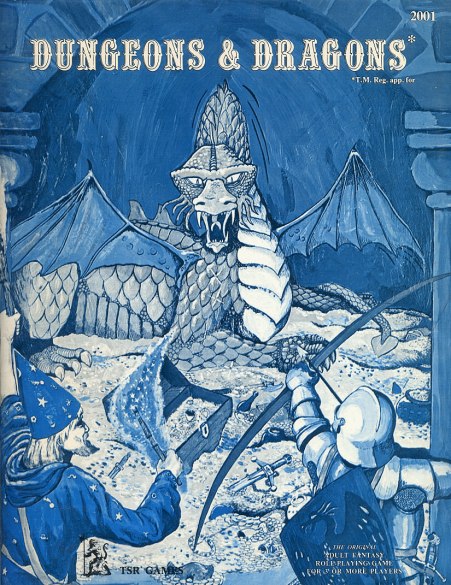
I’ve watched D&D from afar for awhile now, the tactical triumph of 3rd edition and the massive resurgence of the genre with the 1-2 punch of the LOTR movies and 3rd edition, then the Descent-like 4th edition (which should have just been a huge box set with tons of miniatures instead of the big ass books), the B/X-OSR movement with Labyrinth Lord and Lamentations of the Flame Princess bringing it back to the Basic D&D books we actually played back in the day (pulling only monsters and spells from AD&D).
All that said, I threw in the towel on actually playing D&D in the mid 80’s for various reasons– first off it got pretty boring. Roll up a character, fight in a dungeon, get loot, etc. By ’86 or so there were many other options and settings. Paranoia, TMNT (don’t laugh, it was a fun game), Cthulhu and the game that killed D&D for me for pretty much forever: Warhammer Fantasy Roleplay.
WFRP killed D&D for many reasons, first off it was badass visually. It’s like putting the Fiend Folio up against the Monsters Manual– the art in the latter, with the exception of Dave Trampier’s amazing work, PALES in comparison to everything in Fiend Folio. For the same reason WFRP’s art (and miniatures) were beyond compare in the late 80’s to everything else. Secondly, the game was mature and getting into the mid-teenage years, this was important, while 2nd edition D&D was artistically bland and took no chances at all with gore, WFRP was all about the goreplosions, insanity and corruption. You weren’t just going into dungeons and looting stuff for the sake of loot, you were committing crimes and murders in a fantasy setting (or rescuing bratty noble kids) within a backdrop of an absolutely dismal (yet magical) campaign world. Your patrons were always the shadiest of individuals and every adventure threw new things at the players that were not dungeon romps at all, especially the axiom that is so important to good adventure design these days: “no good deed goes unpunished.” Players weren’t plowing through hordes of over-used ‘non-humans,’ instead they were in deadly fights most of the time with humans or human-like mutants. Anytime you’re up against non-humans in WFRP, likely you were dead meat.*
Third, the career system in WFRP was excellent and a vast improvement over leveling up. While it’s just a set of skill and bonuses, the WFRP career system still makes me want to play the game every time I read it. Instead of a flat set of stats and weapons (that are all just bonuses to your stats) WFRP had a rich set of skills for players to acquire that allowed the fighter and thief to be as interesting as the Magic users with their spells. Finally, the adventures went into some very morally difficult ground. It goes without saying that the quest and campaign writers on WFRP back in the day were doing things no one else (maybe Cthulhu) would even touch.
So why play D&D/D20 at all? Why bother? There’s an itch that just can’t be scratched with the FATE/Cortex and that’s the dungeon romp and repeated monster smashing. While FATE and Cortex (and their ilk like Burning Wheel) are amazing for short narrative campaigns, the play is missing three key things that D&D/D20 offers: Dungeon crawling with lots of fights, leveling up and magic items. What’s more, combats in FATE/Cortex are so definitive and deadly that it’s never about the grind: in an even fight likely some of the characters are going to take serious consequences or be taken out entirely. Fights are always about story progression, and when playing FATE/Cortex, that’s awesome.
What 13th Age offers players and DM’s is the ability to have D20 style fights and levelling with some of the best parts of FATE/Cortex’s story driven elements. Combat and combat power is taken out of the narrative system by design. Whereas characters in 13th Age have ‘aspects’ (backgrounds) like FATE, they cannot be utilized in combat–but they are there for everything else to push the story forward.
So with the announcement of 5th edition D&D slating it for this summer and Pathfinder continuing on the grid-based, tactical version, I’m saying to my 2 readers that the new D&D is already here, and it’s 13th Age. It’s not the D20 for every group but it’s a great compromise between the level up crunch and the narrative.
Here are a couple of high points:
Classes are extremely different – though there are three fighter classes and three spell casters, they all play different.
No XP, GM determines leveling when he sees fit.
No skills, backgrounds (aspects) instead which define narrative as well as skills.
Ingrained character relationships with powerful entities in the world that push the story forward.
All the good stuff from 4th edition for the grindy battles (recoveries, class powers, etc.) but no-grid battles that can be done completely without miniatures
Ah a rare thing, actually finishing a game…I finally beat TL2 on elite (not hardcore) vanilla. It took over 60 hours with a single character to win it… that was with just a bit of help from sensless with a couple of items that I could only use at the end of the game. Elite was very very difficult– I died about 500 times and probably could have died a lot more but just wanted to get it done. I know I could have farmed at lower difficulties or with other characters, but this was about being almost pure with Elite– going through the whole game from start to finish with nearly zero help. I finished the game at level 52 and I can say that most of my gear was about 10 levels lower, so I definitely hadn’t farmed up enough to really run the end game comfortably.
The next time I go through I can farm up with a higher level character and pass items down, potions, spells, everything because the elite hair on the chest has been grown…
The build
I used a berserker and focused on Shadow Dash/Wolfstrike with Frenzy Mastery and Blood Hunger as primary skills. All of this is for survivability rather than damage output. Essentially she would heal whenever she landed a critical and could shadow dash for insta heal and escape when she got in trouble. The key path is to stay on the edge of a mob and use your normal attacks to build your frenzy meter since when you are frenzied it’s all (well almost all) criticals. Once frenzied, you can stand toe to toe with any boss that cannot one shot you (which aren’t many!). For my primary weapon, I used a large mace that I placed the rift ember in (+10 Mana steal on hit) for max amount of DPS for my AOE’s (Wolfstrike/Shadow Dash) and then switched to two rather lackluster claw weapons when I was frenzied for any bosses– increasing my attack speed by triple or more. I just could never find any better claws by the time I finished the game.
Big Death
In addition to the skills above, the berserker extra pet (via Wolf Shad) was huge and I maxed points whenever I could. The summon gives damage output increases, attacks stuff itself for mass damage and heals you when it does damage. I would say it’s the best skill in the game. However, I have this feeling that there was an XP drop when wolf was on the screen…like very little XP at all.
There’s a lot more to explore with the berserker, but I won’t be doing it on Elite unless it’s my Hardcore character who is the sole survivor of our early days hardcore elite group. With him I use very different tactics (sword and shield and a lot less gung ho). The end bosses of TL2 look extremely difficult on Hardcore elite so the farm up will be necessary. If I was to do it again, I would have started on Normal, finished the game and then passed items up to a character on Veteran who then passed items up to a character on Elite. This is tough to do on Hardcore since, well, your characters get croaked.
I’ve had my eye on YOMI, a card game that emulates video game fighting games in paper form for awhile now. I initially assumed there was no way anyone could make an actual fun game out of this. From experience as I’ve tried two of them from the olden days (Video Fighter [below] and Heavy Gear) as well as the goo,d but too simple, Brawl.
Circa 1994- do you remember it? Likely not.
YOMI is available to play online and I gave that a go and it was just OK, it piqued my interest further, but I didn’t think it was all that great from playing the online version, which is exactly the same as the card game except you can’t read the cards. You can technically read them, they just aren’t the focus of the game enough compared to when they’re in your hand. This is huge detriment for a new player because I can say after playing the physical game that YOMI is absolutely superb at pulling off what it’s trying to do and it’s not well represented in the online version since the cards are small and not in your face. So if you are going to give it a try, I would recommend playing with pieces of paper first.
The core mechanic, well it’s just rock paper scissors between Throw, Attack and Block/Dodge. Seems simple? It’s crazy complicated. The rock paper scissors part is just the most basic mechanic. You play a single card each turn. Based on what you played and your opponent has played you can possibly play more cards to combo, extra defense, etc. and this is where the game gets crazy and the rock paper scissors mind game turns into a mechanic that works brilliantly instead of putting you to sleep as it should. Each character deck that I’ve seen (played about 6 of them) plays very differently. Some characters are good throwers, some rush down with tons of small attacks and combos and others set you up for a big hit the whole match. After just a few plays, one notices the huge depth of the game.
Hand management is huge, card flow is huge, and knowing when and where to lay down your big combos is something that will take hundreds of games to master. I am simply shocked that someone was able to pull this off and do it so brilliantly.
As a game, once you have a single deck of one character, you can play– forever. That character likely will never get any other cards you can buy (unless there is a team fight expansion that changes out cards) so if you just want one character to play, your cost of entry is 12$ and never anything else. You could enter a tournament and win and be a champion with just that 12$ spend as YOMI is not about buying up cards and making decks like Netrunner or Shadowfist then playing, it’s about learning a character completely, just like a fighting game on the boob tube.
I’m not a huge fan of the art– it looks sort of like knockoff anime to me rather than the real deal, which Video Fighter and Heavy gear also had issues with. The overarching brand is ‘fantasy strike’ so it seems like the characters in the game are in some sort of Lodoss War style world. And a Panda? I guess… again, a minor quibble, especially since many of the characters are really awesome looking— they’re just not Last Blade 2 awesome.
Those of you physically near me, trust that you will be coerced into playing despite your hatred of fighting games.